

Are you someone looking for ways on how to start a Website on WordPress? This blog will help you throughout. In this fast-paced world, having an online presence is no longer a luxury but a necessity, whether you're a small business, a budding entrepreneur, a creative professional, or simply want to share your passions with the world. And when it comes to building a website, WordPress stands out as the most popular and user-friendly platform available.
For beginners, the idea of creating a website can seem daunting, conjuring images of complex coding and technical jargon. And the question “How to Start a Website on WordPress” remains on top. However, WordPress shatters these misconceptions by offering an intuitive and flexible solution that empowers anyone, regardless of their technical expertise, to launch a professional-looking website. From simple blogs to elaborate e-commerce stores, its versatility caters to a vast array of needs.
This beginner's guide is designed to demystify the process of how to start a website on WordPress. We'll walk you through each essential step, from understanding the core concepts to launching your site, all in clear, easy-to-follow language.
WordPress.com vs. WordPress.org

WordPress is the strongest content management system for web hosting. But let me tell you that you will come across two ends while dealing with WordPress. First is WordPress.com, and the one is WordPress.org.
WordPress.com offers a complete solution for website design, including domain, web host, themes, plugins, and more.
While at WordPress.org, you are provided with custom software that needs to be paid for. Though it is free software, you need to manage the coding part and pay for the domain, hosting, themes, and more.
How to Create a WordPress Website
WordPress is a dignified platform that has been a boon for millions of websites all over the world. It provides the best CMS, so even beginners can join the platform for web design. Its ease of use, professional features, vibrant designs, themes, and everything else are commendable. So without wasting much time, let us move ahead to look at the steps to creating a WordPress website.
Step 1: Select a WordPress Plan

The question that remains on top is How to start a website on WordPress has its answer. So, we are in the first stage of creating a WordPress website, which is to select a WordPress plan. As discussed earlier, you will find two alternatives while heading to the WordPress platform. They are "WordPress.com" and "WordPress.org". Now the urge is to select from them, and we strongly recommend you go with "WordPress.com".
As with "WordPress.org", you get only one plan to choose from, and that is the free plan. That’s not enough; you need to pay for further proceedings like domains, hosting, themes, plugins, and more.
With "WordPress.com", you get to choose from five distinct plans for your website design. This comes in a complete package, holding everything you need for a website design.
And therefore, going with "WordPress.com" is the best solution.
Step 2: Choose a Domain name

With this question in mind, “How to Start a Website on WordPress”, we are moving to the next step, which is choosing a domain name. Once you have chosen the WordPress plan, the next step is to choose a domain name for your website.
A domain name is the addressing asset of a WordPress website through which users can easily find it on the web. It is the ultimate unique address that represents your website on the internet with a unique identity. It mainly looks like "www.websitename.com". Here, instead of “websitename” should be the actual name of your website. If you are new to these things don't worry our Tutorial guide on How to pick a Domain Name will surly help you get yourself a Good Domain Name.
You must have heard of domains like “.com”, “.co” and “.in”. But, users are more used to the “.com” version. You must keep more of such things in mind while getting a domain name for your website. Here is the list:
- Keep the domain name shorter.
- Avoid the use of numbers and dashes.
- Make sure you are not using the trademark names or copyright materials.
- Keep your domain simple to pronounce.
- Choose an easy-to-understand domain name.
To make your work easier, you can search the domain for your website using a free tool. There is a popular domain name generator tool called Domainwheel. Simply enter the name of your business or blog, and below you will see mindful domain suggestions.
Step 3: Get a Professional Hosting Provider

With the question “How to start a Website on WordPress”, we are heading with getting a professional hosting service. You already know that the domain is the main address, and you must know the hosting is the home of your website.
It provides a professional space or server for your website where all the files and data are stored. Ultimately, the most popular WordPress hosting provider impacts the speed, reliability, and performance of the website. You will find tons of hosting providers on the web, but the urge is to select the best one for your web project.
Without making it more complicated, I suggest you go with the Bluehost hosting service. This is the leading provider of web hosting and design services across the world. And never fails to benefit clients with its fast and reliable web hosting services. Here are some of the features of Bluehost that will help you make a firm decision:
- Bluehost is well-optimised for speed and performance factors.
- It gives 24/7 customer support to the clients.
- User-friendly dashboard.
- It provides fully customizable websites.
- Secure shell access for your website.
- Free domain for a whole year.
So now that you have learned about the features of how Bluehost works for your website, you can proceed to get it. Here are the steps to creating a website with Bluehost:
The prime aspect is to access the Bluehost official website and hit the Get Started button.
The next page will help you choose from different plans for web hosting. Here, you can choose from the basic, plus, choice plus, and pro plans. This is the cheapest plan you can get for a smaller website.
Otherwise, you can go for other plans that have advanced features for web design.
Once you have chosen the plan, the next page will let you choose the domain for your website. Here, you will have two options: either you can create a new domain or you can go with the domain you already own.
Once you have your domain, the next page will be the billing page. Here, it is advised to complete the payment details and make the purchase of the hosting plan. Once done, you will now be able to access the dashboard of the hosting company and install WordPress.
Step 4: Install WordPress and Configure the Settings

When you have successfully purchased the right hosting plan, you can now get WordPress installed. You might be in a state of thinking that installing WordPress is very difficult. No, that’s the easiest task when you have chosen the right web hosting platform. A reputable hosting service will professionally handle the necessary tasks or let you do them with a single click.
That’s why Bluehost, being a professional web host, will do the needful for you. It provides a single-click installation process, or it does it automatically for you. When you have completed the registration process for your web host, it will soon send you a confirmation email. The email will guide you with the login details and directions to create a site. With these steps, you will reach the Bluehost homepage with options on the sidebar. Here, you need to find the My Sites tab and hit the Add Site option.
Then you have to tap the Create Site button on the right side of the page. This will take you to the login details that you have been provided in the email. Simply enter the username and password accordingly, and now you have your blank website ready.
The website is ready to be splashed with designs and functionalities. If you want to Install through FTP then you can follow our Step by Step guide on how to Install WordPress using FTP.
Step 5: Get a Premium WordPress Theme
When you have passed the initial stages of the website's creation, it's time to spruce it up with a theme. A theme is the visual controller of the website you are visiting. How your website is going to present itself in front of the audience, along with other controls, is determined by the theme.
A theme is not just a decorative element. It comes in a package full of templates, layouts, formatting styles, and more visuals. You'll notice that WordPress, by default, includes a pre-installed theme. You can either use it and customise it as per the requirements, or simply change it.
To build a strong audience or customer base, opt for a customised theme. Well, WordPress again provides a happy place for clients to choose from thousands of themes. These are found in the free and premium versions, respectively. Free themes come with no installation charges but offer limited features. While the premium WordPress Themes versions need to be paid for but have advanced features and support.
Accordingly, there are themes for almost every niche you choose to have. It can be e-commerce, corporate businesses, portfolios, blogs, or any other; there are so many options. Some users may be confused about choosing the best theme that complements their website perfectly. The primary step is to note down the requirements of your niche website. And then look for the factors below in the theme you have chosen for your website:
- A perfect theme must have minimal and clean designs.
- It should be user-friendly to use.
- The theme should allow for customisation.
- SEO optimisation is a key factor to consider.
- Responsive design is the priority, as the website must look good on all devices.
- The theme must be well-documented and available in its upgraded version.
- It should be easily compatible with essential plugins.
- It should be easy to translate into global languages.
- Reviews and ratings must be strong enough.
- It should have a strong customer support team.
To help you with getting a good WordPress Theme, we have some useful suggestions.
Interior WordPress Theme

Elevate your online presence with the VW Interior Designs WordPress Theme. This stylish, feature-rich option is perfect for interior designers, decorators, furniture stores, and home improvement businesses, enabling them to beautifully showcase projects, products, and a wide range of services.
Property Developer WordPress Theme

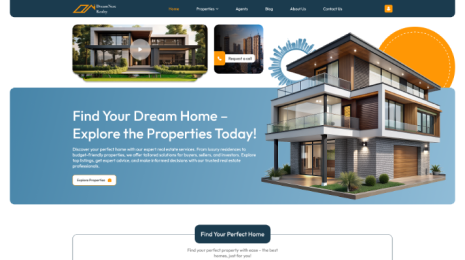
The VW Property Developer WordPress Theme is a premium, professionally designed theme tailored for real estate developers, agents, and property management firms. It’s built to help you showcase residential, commercial, or industrial properties with style and functionality.
Project Management WordPress Theme

Streamline your online project showcasing and management with the VW Project Management WordPress Theme. This purpose-built solution offers professionals and agencies clarity and control, with free and premium versions available to match your specific feature needs. Now that you know the perfect theme to be chosen, you are ready to get it installed. To get a WordPress Theme installed, reach the WordPress dashboard first.
Among the list of options in the dashboard, tap the Appearance tab and select the Themes option. The page that appears will show you the already installed theme. Here, you need to tap the Add New button at the top of the page. This will take you to the search page, where you will find a standard section of popular themes. You can choose from them, or else search for your required theme. Once found, tap the Install button and then the Activate button. You can now explore its demo content and customise it as required.
Step 6: Add Content to your Website

Content that is stored in WordPress is displayed in the form of posts and pages. Posts appear mostly in blogs and portfolios that follow the reverse chronology order. While the pages seem to be static, the content inside them stays the same for a long time without moving. WordPress allows both posts and pages to be added to raise the value of the website. You can create as many posts and pages on your website by simply following the steps:
- To add posts, simply take your mouse pointer to the WordPress dashboard.
- Then tap the Posts section and select Add New.
- You will reach the editor screen, where you will be able to add the content of your choice.
- You can add blocks to enhance the content's functionality or simply add categories and tags to it. You can use more post formatting options on your posts.
- At the end, hit the Save Changes button, and that’s it.
Pages are static entities, and they mostly appear as home pages, about us pages, privacy policies, and more. You can add such pages to your website or use them to showcase the posts. If you are creating a Blogging website then it is essential for you to know how to create and Publish your Blog posts then visit our Blog on How to create a Blog post in WordPress.
- Creating pages for your website involves reaching the WordPress dashboard area.
- After this, it is required to tap the Add New option under the Pages section.
- This will again help you reach the editor screen.
- You can then customise the page by adding a title, blocks, and more elements.
- After adding content, tap the Save Changes button to store the changes.
Step 7: Customise Your WordPress Website

You are done adding content to your site; now you can easily customise and enhance its presence.
- We will begin with setting up the static front page for your website. For this, you need to visit the settings tab under the dashboard area.
- Then select the reading section.
- Now, in the Front Page Displays section, you need to tap the static page and then choose the number of pages to add.
- Once you have made the changes, save them, and it will be stored on the website.
- For adding a title and tagline, revisit the Settings section.
- Then choose the General option under it. Although your website title was set earlier during installation, you can add a tagline that resembles your website. This can be done by entering a few words in the text section of the tagline.
- Lastly, tap the Save Changes button.
- The next customisation setting is to set the commenting section of the website. While WordPress allows its users to freely add as many comments as they want for user engagement,
- But this can open the door to spammy comments as well. So to manage this, you need to enable the comment moderation setting.
- For this, visit the Discussion option under the Settings tab.
- Then, by scrolling down in front of Before comment appears, you need to check the box "Comment must be manually approved".
- And do not fail to tap Save Changes after this.
- Now, to make your website a clear space for navigation, you must add navigation menus to it. You need to visit the Appearance section and select the Menus option.
- From here, you will reach the creation page of the menu. Give a name to the menu and hit the Create Menu Button. This will create a blank menu.
- The next page will let you choose pages under the menu by tapping the “Add to Menu” button.
- After this, click the Save Menu button to store the changes.
This is how you can explore more custom settings for a perfect website. If you are a Beginner then we recommend you to follow our tutorial guide on How to customize your WordPress theme.
Step 8: Add Plugins to Raise the Functionality

Plugins are tiny software modules that help increase the functionality of a website. These are available for almost every feature of your website, and that too in a huge number. On its website, WordPress supports over 50,000 plugins. You can choose to add the necessary plugins to your website accordingly. Here are some of the vital plugins you can add:
- An all-in-one SEO plugin helps in the SEO growth of the website.
- The Yoast SEO plugin aims to boost SEO rankings on the web.
- The Monster Insights plugin is for measuring Google Analytics.
- You can add forms to your website by using the popular WP Forms plugin.
- The Push Engage plugin deals with the website traffic on your website.
- Then comes the UpdraftPlus plugin for secure backups.
- Boost the security tactics on your website using Sucuri Security.
To add a plugin to your website, visit the WordPress dashboard and then choose the Plugins section. On the plugins page, tap the Add New button at the top. You need to search for the plugin you wish to get and then tap the Install button. Then tap the activate button. You can add more plugins by following the same process:
Step 9: Optimise Your WordPress Website

Done with adding everything to your new website? Wait! Did you check whether the website is optimised well? This is the most vital part of ensuring the speed of your website. Assume your website is live, but the pages are too slow to load. Users will eventually roll back from your website, and this has a bad impact. But not to worry, you can optimise your website by using best WordPress SEO Plugins such as Yoast SEO or Rank math.
Caching is the process by which you temporarily transfer website data to the browser. When the users request the data, it will be directly fetched from the browser without bothering the server. This will eventually increase the website's speed.
While WordPress does not allow direct caching from its interface, you need to use plugins for it. Among the wide variety of caching plugins, you can use WP Super Cache, WP Rocket, and more.
Step 10: Test and Launch your Website
You have done the work of building your website along with customising and optimising it, now it's time to test it. Here are some vital key aspects to check before you send your website on air:
- Click every internal and external link to ensure they lead to the correct pages and that there are no broken links.
- Test all contact forms, comment forms, subscription forms, and any other forms on your site.
- Verify that all buttons and CTAs are clickable and perform their intended action.
- Check all navigation menus and sub-menus to ensure they expand and link correctly.
- View your website on various devices (desktop, laptop, tablet, smartphone) with different screen sizes. Ensure the layout, images, and text adapt correctly and look good on all of them.
- Proofread all content meticulously. Consider using a tool like Grammarly.
- Ensure all images are optimised for the web (compressed) to improve loading speed, but still look clear and not pixelated.
- Use tools like Google PageSpeed Insights, GTmetrix, or Pingdom Tools to analyse your website's loading speed.
- Check that your meta titles and descriptions are unique, compelling, and relevant for each page/post.
Once you're happy with the website testing, it's time to launch.
Conclusion
This blog offers a complete guide on how to start a website on WordPress, transforming your idea into a tangible online presence. From understanding the core components of a WordPress site to navigating the initial setup and crucial testing phases, you've been equipped with the fundamental knowledge to bring your vision to life.
While the process might seem intricate at first, remember that consistency and a willingness to learn are your greatest assets. You've learned how to choose the right hosting and domain, install WordPress, and choose from the variety of premium WordPress themes and WP Theme Bundle, add essential content, and most importantly, rigorously test your site for functionality, responsiveness, and performance.
Blogs Categories
Podcast WordPress Theme (Audio Podcast 2.0)

Latest WordPress Themes











Buy All our Premium Themes just at $119
