

Building an online marketplace that allows multiple vendors to sell their products or services has become a highly popular and profitable business model. From niche communities to sprawling e-commerce hubs, marketplaces offer a dynamic platform for connecting buyers and sellers. While building such a complex platform from scratch can be a daunting and expensive task, leveraging a premium WordPress theme specifically designed for marketplaces provides a robust, efficient, and visually appealing solution.
A premium marketplace theme isn't just about aesthetics it's a powerful framework packed with specialised functionalities essential for a multi-vendor environment. These themes often integrate seamlessly with popular e-commerce plugins, such as WooCommerce and multi-vendor extensions, transforming a standard WordPress site into a fully operational marketplace. By opting for a premium theme, you benefit from professional design, enhanced security, dedicated support, and a suite of features that would otherwise require significant custom development.
This guide will provide the perfect answer to the question, “How to create a Marketplace Website?” We’ll walk you through the step-by-step process of building a marketplace website using a premium theme, covering everything from choosing the right tools to launching your site with confidence.
If you are here for WordPress Themes then don't worry you can also choose from our variety of Premium WordPress Themes tailored for 100+ Niches and Businesses.
What is a Marketplace Website?
A marketplace website, also known as an online marketplace or multi-vendor platform, is an e-commerce website where products or services are provided and sold by multiple independent third-party sellers, rather than by the website owner alone.
Think of it like a digital shopping mall or a virtual bazaar. The marketplace owner creates and maintains the platform, provides the infrastructure for transactions, and often handles aspects like payment processing and customer service. However, they typically do not own the inventory or directly sell the goods/services themselves. They bring buyers and sellers together.
Steps on “How to Create a Marketplace Website” with ease
Get completely acknowledged on how to create a Marketplace website with the step-by-step guide:
- Get a web host and a domain
- Install WordPress
- Install and configure Woocommerce
- Get a Good Marketplace WordPress Theme
- Add Plugins
- Add Products
- Setup Shipping
- Setup Payments
- Test and launch your website
Step 1: Get a Web Host and a Domain

With the question “How to make a Marketplace Website”, we are on the first step, and it is to set up a web host and a domain.
To begin with, every website needs two essential elements: a unique identity and a place to exist online. This is achieved by securing a domain name and a web hosting service.
The domain name is essentially the address of your website, the unique identifier people type into their browser to visit your site. It typically begins with "www" and ends with extensions like “.com”, “.in”, or “.co”. A good domain is simple, clear, and easy for users to remember. Avoid using special characters, uppercase letters, or symbols, as they can make the domain confusing or hard to recall. Some popular domain registrars you can consider include Namecheap, Bluehost, and GoDaddy.
On the other hand, web hosting is the physical space where your website’s files, images, databases, and confidential data are stored. It serves as the foundation of your website, providing the server space required for your site to be accessible on the Internet. Think of it this way:
- If your domain is your website’s address, then your hosting is its actual home.
- Choosing a reliable web hosting provider is crucial, especially if you're building an e-commerce site.
- A good host ensures your website’s performance, security, and uptime reliability.
- Be sure to choose a hosting plan that aligns with the specific needs of your website. Just like domain providers, there are numerous web hosting services available online.
- To choose the right one, it’s essential to look for a host that supports the latest versions of PHP and HTTPS, ensuring your website stays up-to-date, secure, and fast.
- A good web host should offer essential web design tools and features that enhance your site's security, reliability, and performance. Popular options include Bluehost, DreamHost, and HostGator.
Bluehost earns its reputation as the most recommended hosting provider. It offers everything you need to get your website up and running smoothly. One of the key advantages of Bluehost is that it includes a free domain name for the first year, making it ideal for beginners and budget-conscious site owners.
Additionally, Bluehost excels in functionality, performance, and security, making it an excellent choice for both personal and business websites.
Step 2: Install WordPress

The next step in “How to Create a Marketplace Website” is to install WordPress once you have purchased the web host and the domain.
With Bluehost, installing WordPress is exceptionally easy. They've truly simplified the process, often making it a one-click installation as soon as you get your confirmation email.
Click the link in your email, and WordPress will be swiftly set up for you. To log in, simply go to your Bluehost cPanel. On the right-hand side, find and click "Install WordPress," input your login credentials, and voila, you'll have a blank WordPress website, fully hosted by Bluehost and ready for your creativity!
Step 3: Install and Configure WooCommerce

Moving ahead with the question How to create a Marketplace Website, we are now ready to install WooCommerce.
One of the most crucial steps in building a Marketplace website is choosing the right foundation, and for WordPress, that foundation is WooCommerce.
When it comes to creating a powerful and flexible e-commerce site, WooCommerce is the go-to solution. It’s a robust plugin that gives your website the essential structure and functionality needed to run a successful online store. With its wide range of extensions, WooCommerce helps you tailor your marketplace exactly the way you want.
Here’s how to install and set up WooCommerce:
- Log in to your WordPress dashboard.
- Navigate to Plugins, then click Add New.
- In the search bar, type “WooCommerce.”
- Once the plugin appears, click “Install Now,” and then hit “Activate.”
Once activated, the WooCommerce Setup Wizard will launch automatically for basic configuration.
- Store Location: Provide your business's physical address.
- Industry: Choose "E-commerce" as your primary industry type, especially for a marketplace.
- Product Offerings: Specify if you'll be selling physical goods, digital products, or both.
- Business Information: Fill in key details about your business.
- Theme Selection: Pick a theme that perfectly matches your brand identity and product offerings.
With these initial configurations, your WooCommerce-powered marketplace will be well on its way.
Step 4: Get a Good Marketplace Theme
The “How to Create a Marketplace Website” step guide has reached the point where we need to pick out a perfect theme. This is where you need to set higher boundaries for your marketplace website. Choosing the right WordPress theme has a lot on the performance and appearance.
With WordPress and WooCommerce now installed on your marketplace site, the next crucial step is selecting a high-quality theme to define its appearance and user experience.
Consider your theme the blueprint for your website's design. It's a complete collection of templates, code, and sometimes plugins, all working together to create your site's visual identity and enhance its front-end capabilities. While your WordPress installation comes with a basic theme, choosing a new, niche-specific theme is generally more beneficial. This provides a professional, pre-built design that aligns perfectly with a marketplace model.
While many free and premium marketplace themes are out there, picking the right one can be overwhelming. To help you make an informed choice, we suggest exploring the premium marketplace WordPress theme from VW Themes. As a certified developer of WordPress themes and plugins, VW Themes consistently delivers solutions that cater to user requirements. Their premium Multivendor Marketplace theme is an excellent choice, designed to give your marketplace the innovative look and robust functionality it deserves.
Multivendor Marketplace WordPress Theme

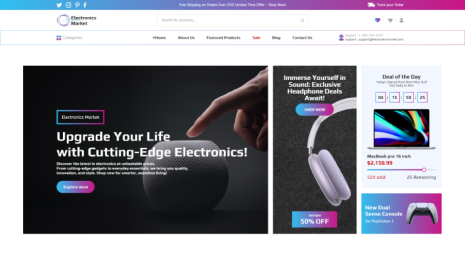
The Premium Multivendor Marketplace WordPress Theme is an exceptional tool designed specifically to empower your online marketplace. Perfect for multivendor businesses, this smartly engineered theme delivers a robust and intuitive platform. Built with the latest WordPress versions and expertly coded with HTML and CSS, it provides a highly customizable and user-friendly interface. Its creative, spacious design is not only visually appealing but also incredibly easy to navigate and personalise, making it ideal for any e-commerce, multivendor, or online store website.
This theme offers unique slider and sidebar options to help you build the perfect assets for your multivendor platform. It's meticulously crafted with a variety of innovative templates and layout features, allowing you to give your multivendor store a distinctive appearance and an incredibly organised interface. With drag-and-drop functionality, you can effortlessly arrange elements for your store pages and posts, simplifying the design process. Plus, its fully responsive design ensures your site looks flawless on any screen size. You won't need to write a single line of code or hire a developer; this theme is designed for everyone, from beginners to seasoned users. It seamlessly integrates with essential plugins, including WooCommerce, to enhance your store's capabilities. Additionally, it features social media icons, custom widgets, and RTL (Right-to-Left) support, providing comprehensive functionality.
Now that you know the power of this theme, let's get it installed on your website:
- From your WordPress dashboard, go to the Appearance section.
- Among the options, select Themes, then click the Add New button.
- On the next page, type "Multivendor Marketplace" into the search bar.
- Once the theme appears, click Install, and then Activate.
Dropshipping WordPress Theme

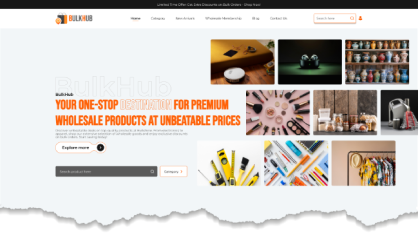
The Dropshipping WordPress Theme is a modern, feature-rich solution designed for entrepreneurs who want to build a professional online store without managing physical inventory. With its sleek, responsive design, the theme ensures your shop looks stunning across all devices, providing a seamless experience for shoppers. It comes pre-packed with user-friendly layouts, product showcases, and call-to-action sections that highlight top deals, new arrivals, and trending products to boost conversions.
This theme is fully compatible with WooCommerce, making it easy to manage orders, track sales, and integrate with leading dropshipping plugins for smooth product imports and automation. Built with performance and SEO in mind, it helps your store rank higher and load faster. Customization options let you personalize colors, fonts, and layouts to reflect your brand identity. Whether you’re selling fashion, electronics, or home goods, the Dropshipping WordPress Theme provides the flexibility and tools you need to launch a successful, scalable eCommerce business.
You're now ready to start customising your powerful new marketplace!
Step 5: Add Essential Plugins

Since we are on the step guide on “How to create a Marketplace Website”, the next step is to add plugins that raise the overall functionality.
Think of plugins as powerful add-ons , small software elements that significantly boost your site's functionality and overall performance.
The WordPress directory alone boasts over 60,000 active plugins (as of current data), offering solutions for virtually any feature you can imagine, available in both free and premium versions. However, you don't need every plugin. The key is to select those that are essential for your specific niche. To simplify this for your marketplace website, we've identified some vital plugins that will make a real difference:
- Dokan: This is the cornerstone plugin for transforming your standard website into a fully-fledged, robust marketplace, enabling you to create a multi-vendor platform akin to Amazon or eBay.
- YITH WooCommerce Plugins: A suite of essential plugins that seamlessly extend WooCommerce's capabilities, particularly beneficial for marketplace functionalities.
- Yoast SEO: The gold standard for search engine optimisation, Yoast SEO helps you optimise your content and technical aspects to rank higher in search results.
- WP EasyCart: For advanced shopping cart features and a smooth checkout experience on your marketplace.
WPForms simplifies the process of creating professional and effective contact forms for your marketplace site.
Wordfence Security: Your ultimate guardian against cyber threats, Wordfence provides robust security to protect your site from breaches and vulnerabilities.
These plugins will form the backbone of your multi-vendor marketplace website. Let’s see how to easily install them:
- From your WordPress dashboard, navigate to the Plugins tab.
- From the plugin page, hit Add New.
- You need to utilize the search bar to install the desired plugin.
- Once located, simply click Install Now, and then Activate.
This process will successfully integrate the chosen plugin's functionality into your website.
Step 6: Add Products

With your marketplace website set up, the next step is adding products. A core function of any marketplace is enabling vendors to list their products. This section covers both how you, as the administrator, can add products and, crucially, how to empower your vendors to do the same.
To ensure your vendors can easily add their offerings, you need to grant them access to their dedicated dashboard. When you add a new vendor, their login details are automatically sent to them.
To configure vendor product upload permissions:
- Firstly, under the Settings section of the WordPress dashboard, go to the Dokan plugin.
- Go to the General tab.
- Make sure "Disallow vendors and customers to access the admin area" is unchecked; this allows vendors to use their frontend dashboard.
- Under the Selling Options section, make sure the box next to "New Product Upload" is checked.
- This setup allows vendors to independently upload their products through their vendor dashboard.
- As the marketplace administrator, you can also add products directly:
- In your dashboard, access WooCommerce, then Products.
- Click on the Add New button.
You'll arrive at a blank product editing screen. Here, you can fill in all the essential details for your product, including:
- Title and Description: Give your product a clear name and detailed information.
- Product Data: Configure pricing, inventory (stock levels), shipping options, linked products, and more.
- Media: Upload high-quality images and videos of your product.
Once all the details are entered, click the Publish button to make your product live on the marketplace.
Step 7: Set up Shipping

For any marketplace website, establishing clear and efficient shipping options is crucial. WooCommerce simplifies this process significantly. To empower your vendors with their shipping controls, you'll need the Pro version of the Dokan plugin.
Here's how to configure shipping settings:
- On the Dashboard area, visit WooCommerce under the Settings section.
- Click on the Shipping tab.
- Then, select the Dokan shipping link.
- On this page, you can enable or disable various shipping options, adjust tax settings, and customise the method titles.
- Once you've made your selections, click Save Changes.
With this setup, you and your vendors gain the essential tools for efficient shipping management on your marketplace.
Step 8: Set up Payments
Now, the next step in “How to Create a Marketplace website” is to set up payments on your website.
Setting up secure and Popular payment gateways is fundamental for any e-commerce or marketplace website. WooCommerce significantly simplifies the process of accepting online payments, offering diverse options such as direct bank transfers, credit/debit card payments, Cash on Delivery (COD), UPI, and more.
It's important to note that payment method setup is primarily managed by the store owner (you), not individual vendors. However, the Dokan plugin (particularly its Pro version) plays a crucial role by enabling vendors to set up their tax profiles and integrating advanced payment options like PayPal and Stripe for their earnings.
To configure your store's payment settings:
- Access WooCommerce Settings from your WordPress dashboard.
- Go to the General section and then the Tax tab. Here, enable the Taxes option if you plan to manage taxes.
- Next, toggle to the Payments tab.
From here, you can select and configure the specific payment types you wish to enable for your marketplace.
Step 9: Test and Launch your website

Once you've built out all the essential components of your marketplace website, a thorough preview and testing phase is critical before you go live. This ensures everything functions perfectly for your customers and vendors.
Here's a checklist to complete before launch:
- Navigate through all key pages, Home, Shop, Product Pages, Cart, Checkout, Vendor Dashboard, etc. Make sure they load correctly and look as expected.
- Ensure your pages load quickly without errors. A slow site can hurt user experience and conversions.
- View your site on multiple devices (mobile, tablet, and desktop) to confirm it displays and functions properly across all screen sizes.
- Make sure all plugins and your theme are up to date and working together without conflicts or errors.
- Place a test order as a customer to ensure the entire purchasing process, including cart, checkout, and payment, is functioning smoothly.
- Once you're confident everything is working as it should, you’re ready to officially launch your Marketplace website and start welcoming vendors and customers.
VWThemes WP Theme Bundle offers a collection of premium WordPress themes designed for various niches, ensuring responsive design, SEO optimization, and user-friendly customization. It’s a cost-effective solution for creating multiple professional websites with ease.
Conclusion
The question “How to create a marketplace website” has its answer in the above blog. Creating a marketplace website with a premium theme streamlines the entire process, offering advanced design, built-in features, and professional flexibility. From selecting the right theme and configuring WooCommerce to enabling vendor functionality and customising product listings, each step plays a crucial role in building a fully functional and user-friendly platform. A premium theme not only enhances your site's visual appeal but also ensures better performance, support, and scalability key factors for any growing marketplace. With the right tools and a clear roadmap, launching your multi-vendor website becomes not just achievable but highly rewarding. Now that your marketplace is up and running, you can focus on what truly matters, attracting vendors, driving traffic, and delivering value to your customers.
Blogs Categories
Podcast WordPress Theme (Audio Podcast 2.0)

Latest WordPress Themes













Buy All our Premium Themes just at $119
