
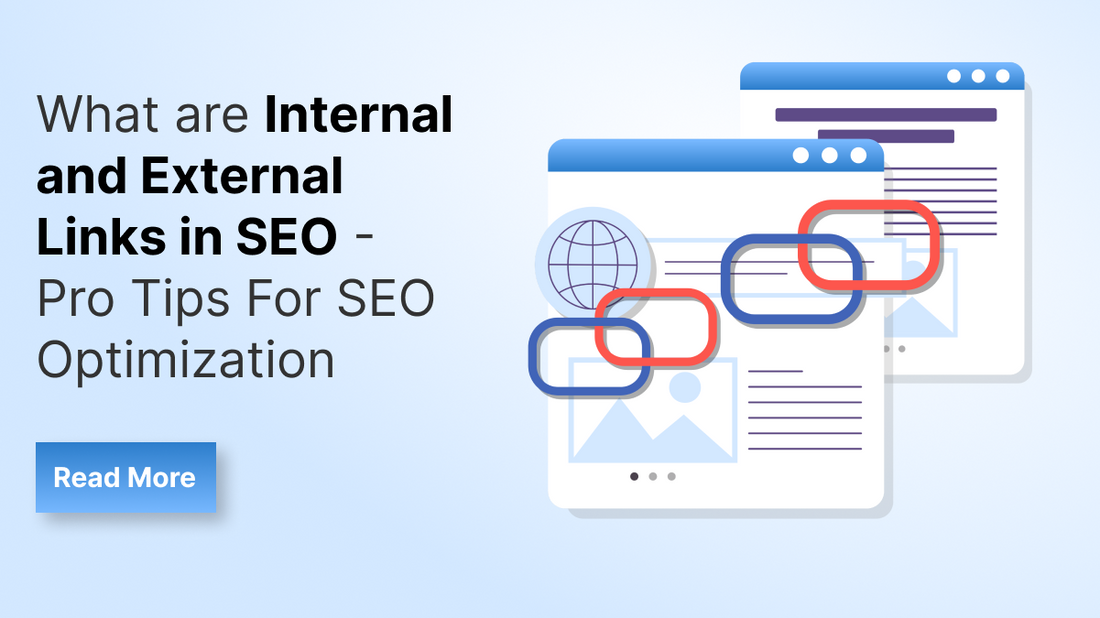
In the world of Search Engine Optimisation (SEO), links play a crucial role in determining a website’s visibility and ranking. Internal and external links in SEO are fundamental concepts that significantly influence a website's visibility and authority. Understanding their roles and implementing effective linking strategies is crucial for improving search engine rankings and user experience.
Whether you're a beginner trying to structure your blog or an experienced marketer optimising for Google’s algorithms, mastering Internal and External Links in SEO is essential. In this guide, we’ll break down what these links are, why they matter, and share pro tips to help you use them strategically to enhance your site's authority, improve user experience, and drive more organic traffic.
Let’s dive in and see some of the best WordPress SEO Optimization tips and start linking smarter!
What are Internal and External Links in SEO?

When optimizing your website for search engines, understanding the difference between internal and external links is fundamental. WordPress Internal linking are hyperlinks that point from one page to another within the same website. These links help structure your website, guide visitors to related content, and allow search engines to better crawl and index your pages. For example, linking from your homepage to a blog post or from a service page to a contact page enhances user navigation and distributes page authority across your site. On the other hand, external links point from your website to a completely different domain. These are often used to reference credible sources, back up claims, or offer additional value to readers. Linking to authoritative websites like WordPress.org or industry blogs signals trustworthiness to search engines and can strengthen your content’s relevance. Both types of links play a crucial role in SEO internal links boost user engagement and improve on-site structure, while external links help establish credibility and can even lead to backlinks if others link back to your content. Balancing the use of both ensures a stronger SEO foundation and a better experience for your users.
Internal Links

Internal linking is the practice of connecting different pages within the same website using hyperlinks. These links guide users through related content on your site and help search engines understand the hierarchy and structure of your website. Effective internal linking ensures that important pages receive more visibility and authority by distributing link equity throughout your site. It also enhances user experience by allowing visitors to easily navigate to related topics or deeper content without having to search manually. For example, linking a blog post about “WordPress SEO Tips” to a related post on “Best SEO Plugins for WordPress” encourages users to stay longer on your website, increasing engagement and reducing bounce rates. Additionally, internal links help search engine bots crawl and index your site more efficiently, which can positively impact your search rankings. Overall, internal linking is a strategic Off-Page SEO best practices that improves both site usability and visibility in search engines.
Internal links come in multiple categories that must be known to you:
- Navigational Links: These are the most common and include your main menu, sidebar menus, and footer links. They provide a site-wide navigation system.
- Contextual Links: Embedded within the body of your content, these links point to related articles, products, or resources on your site. These are crucial for users and SEO because they offer context and frequently employ relevant anchor text.
- Breadcrumbs: Breadcrumbs show users where they are in a website's navigation. They improve usability and help search engines understand site structure.
- Call-to-Action (CTA) Links: Links within buttons or specific calls to action that direct users to desired conversion points.
Here’s why Internal Links are important for SEO:
Improved Site Navigation and User Experience

Internal links act as pathways, guiding your users logically from one piece of content to another. This makes it easy for visitors to explore your site, find related information, and delve deeper into topics they're interested in. When users can easily navigate and discover relevant content, they tend to stay on your site longer, explore more pages, and have a better overall experience. By connecting related content, internal links help users build a comprehensive understanding of a topic, offering additional resources and supporting information.
Enhanced Crawling and Indexing by Search Engines

Search engine bots (crawlers) follow links to discover new pages on your website. To ensure all Importance of backlinks of pages are easily discoverable and indexed, implement a robust internal linking structure. When you publish new content, adding internal links to it from existing, authoritative pages helps search engines find and index it more quickly. Internal links help search engines understand the architecture and hierarchy of your website. They signal how different pages relate to each other and which pages are more important within your site's overall structure.
Distribution of Link Equity
When a page on your website has strong external backlinks, it accumulates "link equity" or "PageRank." Internal links allow you to strategically distribute this valuable "link juice" from your high-authority pages to other, less prominent pages within your site. This can help boost the visibility and ranking of those linked pages. The more internal links a specific page receives, the more important it appears to search engines. Linking strategically to your cornerstone or pillar content highlights its significance.
Contextual Relevance and Anchor Text

The anchor text (the clickable text of an internal link) provides context to both users and search engines about the content of the linked page. Using descriptive and relevant anchor text helps search engines understand the topic of the destination page, which can improve its ranking for related keywords. Strong internal linking helps search engines semantically grasp your site's topics, enhancing its topical authority.
External Links

External linking refers to the practice of linking from your website to another domain or website. These links point users and search engines to valuable, relevant content hosted on other trusted websites. External links serve multiple purposes in SEO: they help search engines understand your content better by showing connections to authoritative sources, and they add credibility to your content by backing up claims or providing additional resources. For instance, if you’re writing a blog post about “WordPress Security Best Practices,” including an external link to an official WordPress.org documentation page or a reliable cybersecurity website can reinforce the accuracy and reliability of your content.
From an SEO perspective, search engines like Google consider outbound links to authoritative domains as a positive signal of trust and relevance. However, it’s important to ensure that your external links lead to secure, high-quality websites and are used in moderation. Too many outbound links, or linking to low-quality or spammy sites, can have a negative impact. Also, using appropriate anchor text and setting links to open in a new tab can improve both user experience and page performance. In summary, external linking is a powerful way to provide additional value to your readers while signaling authority and trustworthiness to search engines.
External links are broadly categorized by direction into two types:
Outbound Links (or External Outgoing Links):

Outbound links direct users from your website to a different one. When you include a link in your content that directs users to a source on another domain, that's an outbound link. When you strategically link from your website to other relevant and authoritative websites, it benefits your SEO in several ways:
- Improved Credibility and Authority: Linking to high-quality, reputable, and relevant external sources signals to search engines that your content is well-researched, trustworthy, and provides valuable information to your users. It demonstrates that you're not an isolated island but are part of a larger, credible web of information. This markedly enhances your site's search engine credibility.
- Enhanced User Experience: For richer content and enhanced reader value, link to reputable resources, data, and studies. If a user can find all the information they need (both on your site and through your recommended external sources), they're more likely to perceive your site as a comprehensive and helpful resource. This can increase user satisfaction and engagement.
- Contextual Relevance: The anchor text (the clickable text) of your outbound links, along with the content of the pages you're linking to, helps search engines understand the broader context and topic of your content. This can improve your site's topical authority.
- Networking and Relationship Building: Even indirect, linking to other sites sometimes nurtures relationships with their owners and bloggers. This can lead to reciprocal links, collaborations, and increased visibility within your niche.
Inbound Links (Backlinks)

Inbound links are those that point from another domain to your website. When another website references and links to your content, that's an inbound link or a make backlinks for site. Backlinks are the most vital external link factor in SEO, essentially acting as website endorsements. Here’s why they are a vital element for SEO:
- Authority and Ranking Factor: Backlinks are a fundamental ranking factor for search engines like Google. When reputable and topically relevant sites link to your content, it acts as a strong endorsement, signifying its value, trustworthiness, and authority. This, in turn, elevates your website's domain authority and improves the ranking of specific pages.
- Increased Crawlability: Search engine crawlers utilise links for content discovery. Backlinks introduce your pages to crawlers that might not otherwise find them, leading to faster indexing.
- Referral Traffic: Backlinks directly drive traffic to your website. When users on another site click on a link to your content, they become referral traffic, which can lead to increased engagement, conversions, and brand awareness.
- Brand Building and Credibility: Backlinks from respected sources enhance your brand's reputation and credibility within your industry. It shows that others in your field recognise and value your expertise.
Tips for Internal and External Links in SEO
Optimising your Internal and External Links in SEO is paramount for success. Here are comprehensive tips for both, keeping in mind best practices for search engines and user experience:
Tips for Internal Links in SEO
- Ensure that clickable text accurately describes the linked page's content.
- Ensure all links point to highly relevant pages that provide extra value to users.
- Ensure every important page on your site is linked from at least one other page. Every important page on your site should be linked to at least one other page.
- Strategically link more to your most important pages (pillar content, high-conversion pages) to pass more link equity.
While important, avoid excessive internal linking that can make your content look spammy or overwhelming. While 5-10 links per 2,000 words serves as a guideline, context and relevance are paramount. Now let's see some of the best Backlink building strategies that you can Implement on your website to Improve your website's ranking.
Tips for External Links in SEO
- Link only to authoritative, accurate, and genuinely relevant websites.
- Ensure the anchor text accurately describes the destination page. Avoid generic phrases like "click here."
- To improve user experience, it's often best practice to have external links open in a new tab. This keeps users on your site while they explore the external resources.
- Don't overload content with outbound links; focus on providing genuine value. Focus on quality over quantity.
- Find broken links on other relevant websites. Contact the website owner and suggest replacing their broken link with your similar, relevant content.
If your site receives a sudden influx of spammy or low-quality backlinks, use Google's Disavow Tool to tell Google to ignore them. This helps prevent potential penalties.
Conclusion
Both internal and external links in SEO are fundamental to a strong SEO strategy, guiding users, facilitating search engine crawling, and enhancing your content's relevance and authority. While talking about SEO now a days users wants their website to be built with a easy customizable themes that are SEO-friendly so are the Premium WordPress Themes from VW Themes. The themes are fully made following every Parameters of SEO practices that will allow the user's website a boost.
Both Internal and External Links in SEO are indispensable pillars of a robust strategy, each playing a distinct yet complementary role in enhancing a website's visibility, authority, and user experience. By actively managing and optimizing both your internal and external linking strategies, you create a powerful web of connections that not only serve your users but also communicate invaluable signals to search engines, ultimately leading to improved organic visibility and sustained SEO success.
Blogs Categories
Podcast WordPress Theme (Audio Podcast 2.0)

Latest WordPress Themes












Buy All our Premium Themes just at $119
